
Ressources
CuttingGardens 2026 - Ressources
Here you can find the materials shared during the conference.
Global talks recordings
Find the videos of the talks on the CuttingEEG Youtube channel
Posters
Participants of local gardens were invited to share their poster. You can find them here.
Music cocked by CuttingCrew:
Music shared by the gardeners:
Birds songs credits:
- Common birds in britany spring countryside 2 by bruno.auzet -- https://freesound.org/s/838024/ -- License: Creative Commons 0
- Birds singing in the forest at morning by AtoMediaDesign -- https://freesound.org/s/649028/ -- License: Attribution 4.0
- Matin_Aigrefeuille by nicotep -- https://freesound.org/s/750635/ -- License: Attribution NonCommercial 4.0
- Seagulls along the Boyne River by danlj -- https://freesound.org/s/624755/ -- License: Creative Commons 0
- Birds and Birdy time by Clement François mixed by Alexandra Corneyllie
Text read at the end of the event
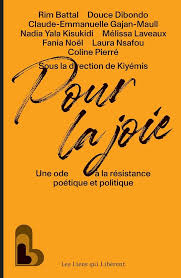
The text is part of the French book: Pour la joie, une ode à la résistance poétique et politique - For the Joy, an ode to poetic and politic resistance. Written by Kiyémis
Find the original French and human-translated English version of the text below:
Je n'aime pas la dystopie.
Ou plutôt, je n'en peux plus. j'en ai lu, j'en ai vu, je comprends leur fonction, leur avertissement, leur radicalité, leur capacité à réveiller. Mais aujourd'hui, elles me donnent la nausée. Parce qu'elles colonisent notre capacité à rêver.
(...)
Je refuse ce sort. Je refuse cette vision unique. Car à force de ne nous proposer que le pire, nous oublions comment espérer. Nous oublions que d'autres futurs sont possibles. Que d'autres récits peuvent nous habiter.
Dans ce monde saturé de catastrophes, la joie est perçue comme suspecte. Comme un luxe naïf. Comme un maque de sérieux. Parler de joie, de douceur, de beauté partagée, c'est souvent se heurter à une condescendance feutrée, à des regards incrédules. Comme si espérer relevait de l'infantilisme. Comme si désirer autre chose que la survie était un caprice.
Mais ce soupçon envers la joie n'est pas neutre. Il dit quelque chose du monde tel qu'il est structuré: un monde qui valorise la productivité, la compétition, la rudesse, la résignation. Un monde qui veut que nous soyons désensibilisées, dociles, pressées. Un monde qui méprise le plaisir libre, la fête collective, la lenteur aimante. Ce monde ne sait pas quoi faire de la joie – alors il la ridiculise, l'ignore, ou l'associe au divertissement superficiel.
(...)
Rien dans notre environnement n'encourage la joie. Ni l'école. Ni le travail. Ni les institutions. La joie est une émotion reléguée à l'intime, à l'anecdotique. Elle est rarement pensée comme un axe de réflexion politique, comme un besoin fondamental, comme une dimension collective.
(...)
Il y a de la puissance dans la joie.
Elle est un bouclier contre les mensonges, d'une manière de se rappeler que tout n'est pas figé. Nos corps, nos imaginaires, nos émotions peuvent se libérer des carcans imposés. Ell est transfomrmtion, elle est interruption. Elle casse les cycles de la peur, elle renverse les logiques de domination. Elle ne demande pas la permission.
(...)
Il y a eu les chants, et les danses qui font tenir les corps, les recettes improvisées avec peu de moyens, qui nourrissaient plus que les ventres. Les proverbes, les blagues, les histoires racontées au coin du lit, les vêtements partagés, les secrets chuchotés.
I don't like dystopia.
Or rather, I can't take it anymore. Though I've read it, seen it, and understand its function, its warning, its radicalism, its ability to wake us up... today, it makes me sick. For it is colonizing our ability to dream.
(...)
I refuse that fate. I refuse that single vision. By only referring to the worst, we forget how to hope. We forget that other futures are possible. That other narratives can inhabit us.
In this world steeped in disasters, joy becomes a suspect. A naive luxury. A lack of seriousness. Talking about joy, gentleness or shared beauty, you may face forms of muted condescension or suspicious glance. As if hoping were a kind of childishness. As if wanting something other than survival were a whim.
Suspicion toward joy isn't neutral. It says something about how the world is structured: a world that values productivity, competition, harshness, resignation. A world that wants us being desensitized, docile, rushed. A world that scorns free pleasure, collective celebration, loving slowness. This world doesn't know what to do with joy — so it mocks it, ignores it, or reduces it to a pure entertainment.
(...)
Joy isn’t encouraged anywhere around us. Not at school. Not at work. Not in institutions. It is an emotion relegated to the private, to the anecdotal. It's rarely thought of as a political axis, as a fundamental need, as a collective dimension.
(...)
Joy is powerfull.
It's a shield against lies, a way of remembering that not everything is fixed in place. It’s a way for our bodies, our imaginations, our emotions to break free from their chains. Joy can be transformation, interruption. It breaks the cycles of fear, overturns the logic of domination. Without asking permission.
(...)
There were songs, and dances that held bodies together, recipes improvised with next to nothing, that nourished more than the stomach. Proverbs, jokes, stories told at the bedside, clothes shared, secrets whispered.